
We all know that running a music studio involves more than teaching scales and repertoire—it’s also about building motivation, consistency, and a sense of progress in your students. One surprisingly effective tool for this is “music money,” a simple reward system that can transform practice habits and studio culture.
This post may contain affiliate links. As a Sheet Music Plus and Amazon Associate, I earn from qualifying purchases. That means I make a small commission (at no additional cost to you) if you purchase something from an affiliate link.
What Is Music Money?
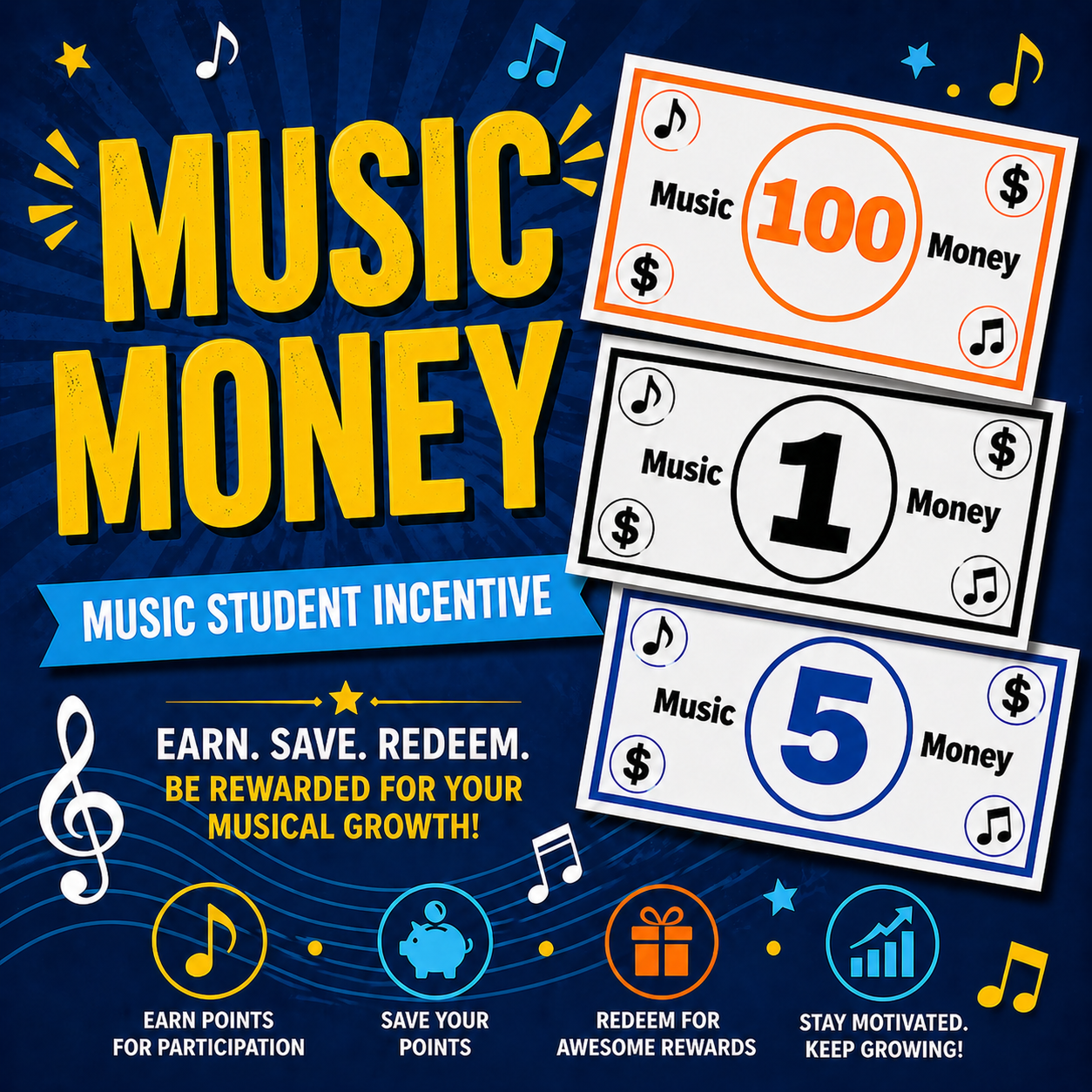
Music money is an inventive that can be used to reward positive behaviors in music teaching. It can be as simple as printed paper “bills”! My students absolutely love earning money. It’s tangible and fun. Students collect their money, save, and eventually “spend” it.
Why It Works
At its core, music money taps into basic behavioral psychology: reward reinforces behavior. When students see a clear connection between their effort and a reward, they’re more likely to stay engaged. But beyond that, it also introduces a sense of ownership. Students aren’t just practicing because they’re told to—they’re working toward something they value.
It’s especially effective for younger students, but even teens can get into it if the system feels age-appropriate.
How Students Earn Music Money
You can customize this based on your teaching style, but here are a few common ways that students earn:
- Practicing consistently throughout the week
- Completing assignments or pieces
- Demonstrating improvement
- Coming prepared with materials
- Participating in recitals or studio events
- Showing positive attitude and effort
Some teachers even award bonuses for challenges like memorization, sight-reading, or composing a short piece.
Creating a Studio Economy
The real fun happens when students can spend their music money. This turns your reward system into a mini “shop” that students are excited to participate in.
In my studio, I created bins that were $5, $10, $15, and $20.
Here are some ideas for what they can buy:
- Small prizes (stickers, mini resin toys, candy, mochi animals)
- Music-themed items (music pencils, music erasers, music clips, sticky notes)
- Larger items (puzzles, brain flakes, washi tape, music journal)
- Privileges (choose a song to learn, play a game during lesson time)
- Entry into raffles for bigger prizes
- Tickets like “No writing day” or other fun lesson perks
Make sure there’s a range of prices so students can choose between saving up for something big or enjoying smaller rewards more often.

Keeping It Organized
Consistency is key. Decide how you’ll track music money—whether that’s a physical envelope for each student, a ledger, or an app. In my studio, each student has an envelope to keep track of their music money.
Adapting for Different Ages
For younger students, bright, playful designs and immediate rewards work best. For older students, consider a more subtle system—points instead of “money,” or rewards that feel more mature, like gift cards or advanced repertoire choices.
You can also involve older students in shaping the system, which increases buy-in.
Potential Pitfalls (and How to Avoid Them)
Like any reward system, music money should support intrinsic motivation—not replace it. The goal is to encourage good habits, not make students dependent on prizes.
To keep the balance:
- Pair rewards with verbal praise and encouragement
- Gradually shift focus to personal goals and musical growth
- Avoid over-rewarding small tasks
Also, keep it fun—not stressful. If tracking becomes overwhelming, simplify.
Final Thoughts
Music money isn’t just about rewards—it’s about creating an environment where effort is noticed, progress is celebrated, and students feel excited to come to lessons. When used thoughtfully, it can energize your studio and help students build lasting practice habits.
If you’re looking to refresh your teaching approach or boost student motivation, this small system can make a surprisingly big impact.

Lauren teaches piano to students of all ages. She enjoys creating resources for her students and teachers. She is the author of Ready for Theory®. For personalized help, check out the consultations page for teachers.