This post may contain affiliate links. As a Sheet Music Plus and Amazon Associate, I earn from qualifying purchases. That means I make a small commission (at no additional cost to you) if you purchase something from an affiliate link.
Note: This post was originally published in 2019. It has been updated with new teaching ideas, organization tips, and additional rhythm activities.
One thing I’ve learned over the years is that simple games are usually the ones students enjoy the most.
I’ve come home from music conferences excited about elaborate games, only to realize they required so much setup and explanation that they weren’t practical during a 30-minute lesson.
When it comes to piano lessons, I prefer activities that students can understand in just a minute or two. That means we spend less time learning the rules and more time reviewing musical concepts.
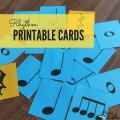
That’s why I keep a set of printable rhythm cards at my piano. They’re easy to grab during the last few minutes of a lesson, and I can use them with individual students, partners, or group classes.
ooking for fun rhythm card games for your piano students? These 10 simple activities use printable rhythm cards to review note values, rests, time signatures, and rhythm math in an engaging way.
If you’re looking for a simple way to review rhythm concepts, I offer both a free set of printable rhythm cards and an upgraded version with even more notes and rests options.
What’s Included in the Upgraded Rhythm Cards?
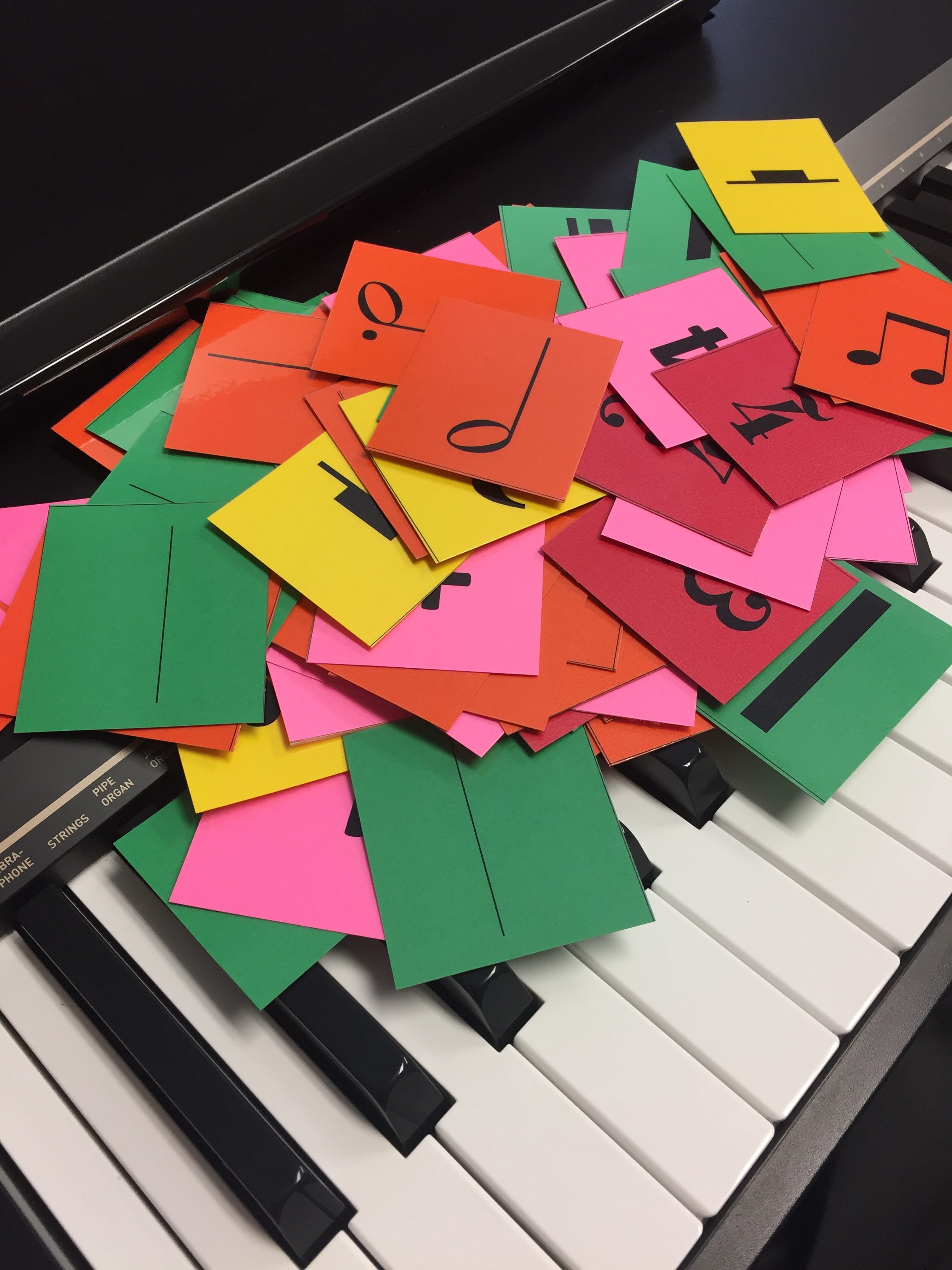
The upgraded set includes cards for:
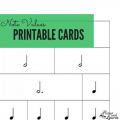
- Quarter, half, dotted half, whole, dotted quarter, eighth, paired eighth, and four eighth notes
- Quarter, half, whole, and eighth rests
- Bar lines and double bar lines
- Time signatures
- Number cards (½ through 8)
- Math symbols (+, –, =)
I like to print each category on a different color of cardstock so they’re easy to sort. After laminating them, they’ve held up for years of teaching.
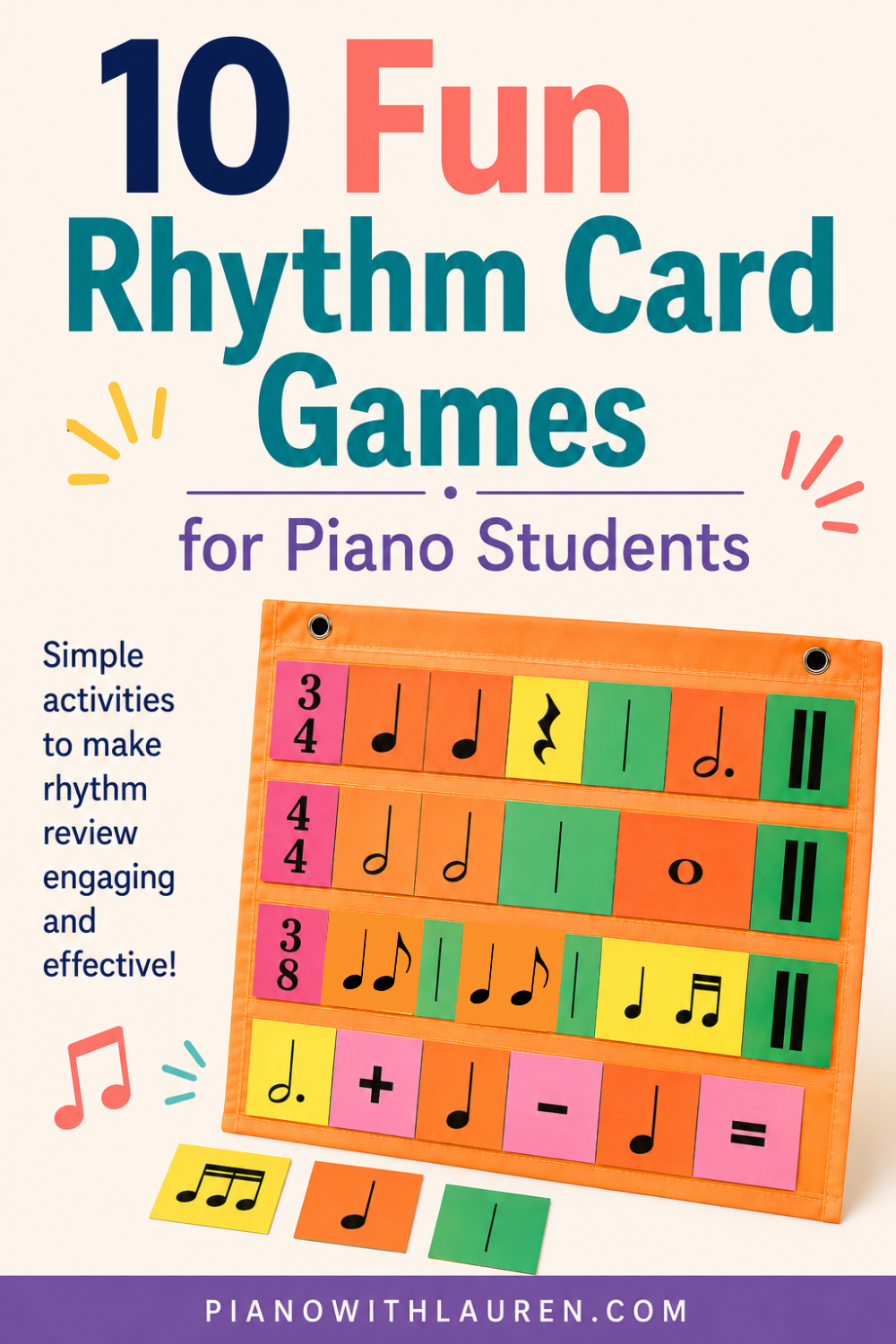
10 Rhythm Card Activities to Try
Looking for fun rhythm card games for your piano students? These 10 simple activities use printable rhythm cards to review note values, rests, time signatures, and rhythm math in a hands-on way for students.
1. Create Your Own Rhythm
Have your student use the note and rest cards to build an original rhythm. Then clap, tap, or play it together.
To simplify: Only use 2-3 different note values (this is great for beginners).
To advance: Give the student certain requirements, such as “Make a measure with 4 beats using only 2 notes.”
2. Practice Time Signatures
Choose a time signature and have students create complete measures using the note and rest cards. Add bar lines to organize each measure correctly.
For partner or group lessons: Have the students take turns creating a measure.
3. Match One Note to a Number
Place a number card on the table and ask your student to find one note value that matches it.
For example, if you place the number 4, students should choose a whole note.
4. Find Two Notes That Equal a Number
Challenge students to find two note values that add up to the number shown.
This is a great way to reinforce rhythm math while encouraging multiple correct answers.
5. Complete the Measure
Place a time signature card down, and then build a measure that’s missing a beat or two. Ask your student to choose one correct note value to complete the measure.
This activity helps students think about counting instead of guessing.
6. Fix It
Create a rhythm pattern using a time signature and 2-3 measures. Have an error in one or two of the measures. Ask the student to find your mistakes and fix them.
7. Solve Rhythm Math Problems
Use note cards and the math symbols to create simple equations.
For example:
Quarter Note + Quarter Note = ?
Students answer using the correct number card.
8. Complete the Rhythm Equation
Reverse the previous activity by showing number cards and asking students to choose the correct note value to solve the equation.
For example:
2 + 1 = Dotted half note
9. Tap Two Rhythms at Once
Create one rhythm for the right hand and another for the left hand. Students tap both lines together to practice coordination and independent hand movement.
10. Let the Student Be the Teacher
Have your student create a rhythm or rhythm math problem for you to solve.
Students love switching roles, and it’s an excellent way to check their understanding.
Make Rhythm Review Fun
These activities only take a few minutes, making them perfect for the end of a lesson, as a quick review, or for group classes.
The best part is that you don’t need complicated rules or elaborate game boards. A simple set of rhythm cards can be used in dozens of different ways, and students often enjoy coming up with new games of their own.
If you’re looking for an easy way to add more hands-on rhythm practice to your lessons, be sure to download the free printable rhythm cards or check out the upgraded version with additional note values, rests, time signatures, and rhythm math cards.
Resources Mentioned in This Post
- Free Printable Rhythm Cards – A simple set of printable cards to get started.
- Upgraded Printable Rhythm Cards – Includes additional note values, rests, time signatures, number cards, and rhythm math symbols.
How I Organize My Cards
I keep my cards in small pouches. I have different packs by level. Here are some examples of how they are separated:
- For beginners: quarter, half, whole notes and quarter rests
- Time signatures and bar lines
Notes for compound meter
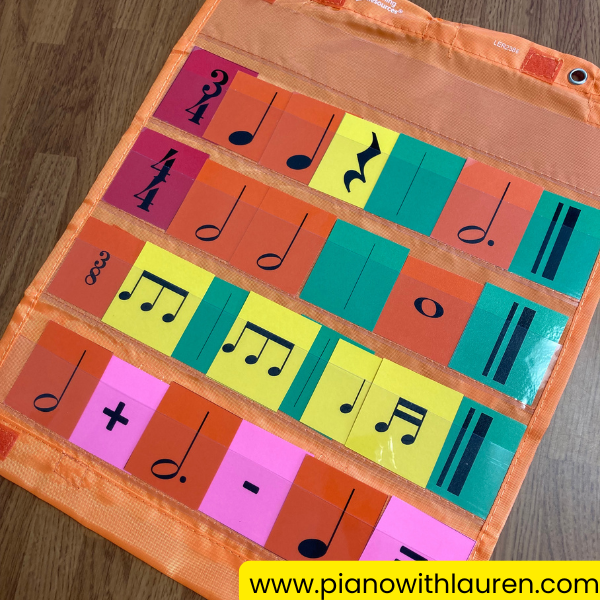
Sometimes I prepare the rhythms ahead of time and set them up in clear pocket pouches. This allows me to have a lesson activity ready to go before my student arrives. Instead of searching for individual cards during the lesson, I simply grab the pouch and we’re ready to begin. It’s a great way to stay organized, save lesson time, and quickly switch between different rhythm activities.
You May Also Like
- Teaching Rhythm to Preschool Piano Students (Ages 4–5)
- Piano Theory for Beginners: What Students Ages 6–8 Need to Learn
- Teaching Rhythm to Beginner Piano Students (Ages 6-8)
- Shake & Tap – A fun rhythm game for students with a dice

Lauren teaches piano to students of all ages. She enjoys creating resources for her students and teachers. She is the author of Ready for Theory®. For personalized help, check out the consultations page for teachers.