This post may contain affiliate links. As a Sheet Music Plus and Amazon Associate, I earn from qualifying purchases. That means I make a small commission (at no additional cost to you) if you purchase something from an affiliate link.
Thirty minutes can go by quickly during a piano lesson, especially when you’re working with young beginners. Between reviewing assigned music, introducing new concepts, working on technique, and incorporating activities, there’s a lot to fit into a short amount of time.
Having a general lesson structure helps you make the most of those 30 minutes without feeling rushed. I like to have a plan for what I want to accomplish, but I also leave room to adjust based on what each student needs that day.
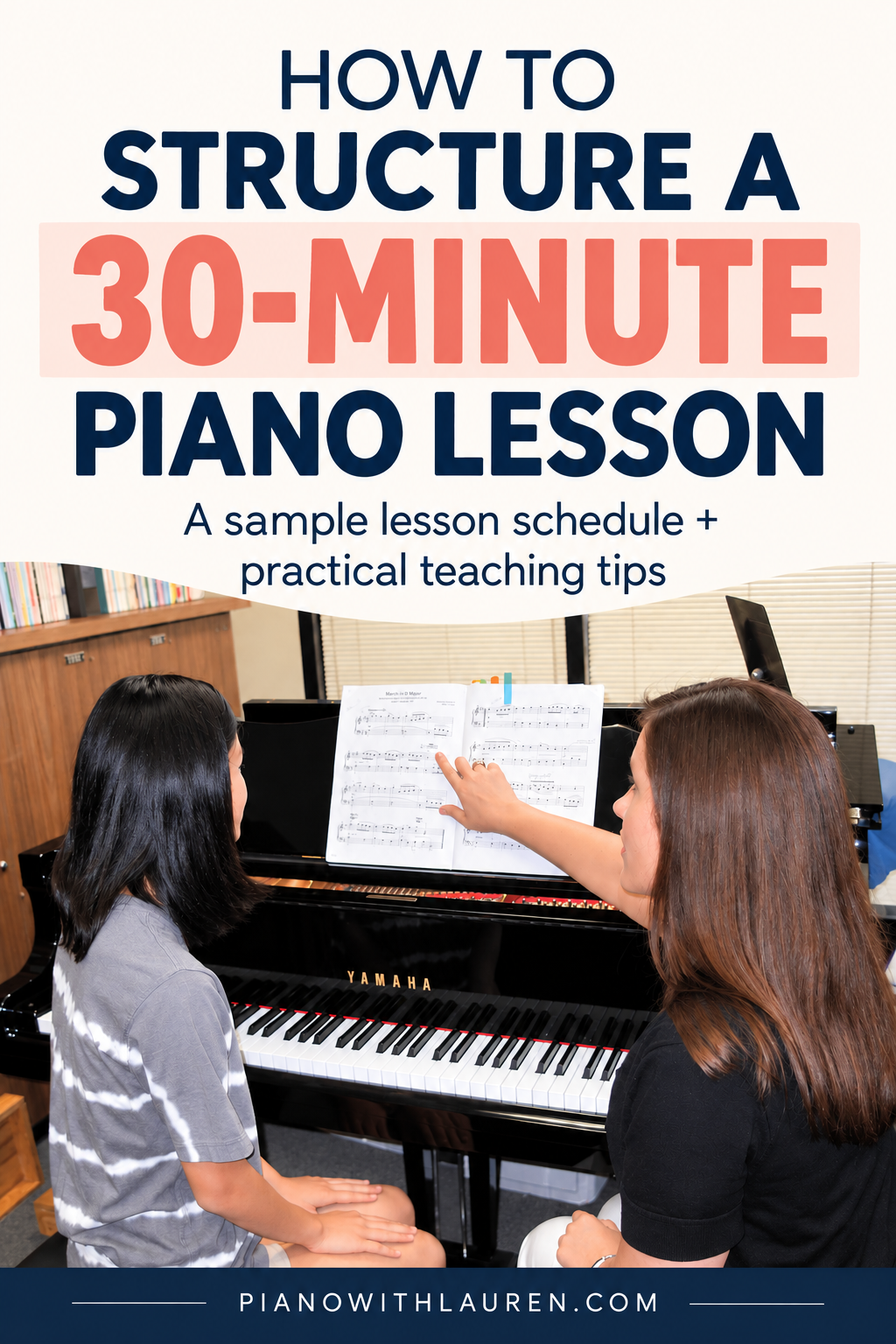
A Sample 30-Minute Piano Lesson Structure
Every student is different, but here’s one example of how you might divide a 30-minute piano lesson.
| Time | Activity |
|---|---|
| 0–2 minutes | Greeting and quick catch-up |
| 2–5 minutes | Technique and warm-up |
| 5–15 minutes | Review assigned music |
| 15–23 minutes | New music and concepts |
| 23–27 minutes | Theory, rhythm, or another reinforcing activity |
| 27–30 minutes | Assignments and wrap-up |
This isn’t meant to be a rigid schedule. Some weeks, a student may need more time reviewing assigned music. Other weeks, you might spend more time introducing something new or reinforcing a concept through a game.
The important thing is to have a general structure that keeps the lesson moving.
Start With a Short Technique Warm-Up
After greeting my students, I generally begin with a short technique exercise. Depending on the student’s level, this might be a simple five-finger exercise, a scale, chords, or arpeggios.
I like beginning with technique for a couple of reasons. First, it gives students an opportunity to warm up their hands and focus on playing. It also provides a nice transition into the lesson before we begin reviewing the music they were assigned to practice.
Technique doesn’t have to take a large portion of the lesson. A few focused minutes can be enough, especially with beginning students.
Keep Conversation Brief
Building relationships with students is an important part of teaching piano. I enjoy hearing about what’s happening in my students’ lives, but I’ve also learned how quickly conversations can take over a 30-minute lesson!
I generally allow about two minutes at the beginning of the lesson to catch up. This gives students a chance to share something about their day before we get started.
For students who are especially chatty, I’ll sometimes suggest that they save a story for the end of the lesson. A simple, “I want to hear about that! Remind me at the end,” lets them know I’m interested while keeping us on track.
There’s nothing wrong with a little conversation during a lesson. The goal is simply to be mindful of how much teaching time is available.
Review Assigned Music Before Introducing Too Much New Material
After our technique warm-up, I usually move into the music students have been practicing during the week.
This gives me an opportunity to see how they’ve progressed, address any problems, and determine what they’re ready to learn next. Sometimes a piece only needs a quick review before we move on. Other times, we may need to spend several minutes working through a difficult passage or reinforcing a particular skill.
I try to avoid spending the entire lesson correcting one piece. If a student is struggling with something, we can work on it together, establish a clear practice goal, and return to it the following week.
Once we’ve reviewed their assignments, we can move into new music or concepts.
Pay Attention to Lesson Pacing
One of the most important parts of structuring a piano lesson is pacing.
Good pacing doesn’t necessarily mean moving quickly from one activity to another. It means recognizing when a student is engaged, when they need more time with a concept, and when it’s time to change activities.
For younger beginners, this might mean alternating between playing at the piano and working on a rhythm or theory activity. Older or more experienced students may be comfortable spending longer periods working on repertoire.
I also like to have an activity prepared that I can use with several different students throughout the teaching day.
For example, I might leave a set of rhythm cards out and adapt the activity based on each student’s level:
- Young beginners: Clap or echo simple rhythm patterns.
- First-year students: Identify note values and tap rhythms.
- Advancing beginners: Add a time signature to a rhythm example and then tap it.
- Older students: Complete incomplete measures with one more or rest.
Using the same materials in different ways saves preparation time and makes it easy to incorporate a short activity when a lesson needs a change of pace.
Make Transitions Between Activities Easy
Even small interruptions can add up during a 30-minute lesson. Searching for a game, finding a worksheet, or deciding what to do next can interrupt the flow of teaching.
Keeping frequently used materials nearby makes transitions much easier. I like having activities available that can reinforce several different skills rather than preparing an entirely new activity for every student.
You don’t need an elaborate game or a large collection of teaching materials to make lessons engaging. Sometimes a simple set of cards or a few manipulatives can be used in several different ways.
Be Flexible With Your Lesson Plan
Even with a good structure, not every lesson will go exactly as planned.
A student may arrive having practiced very little, or they might surprise you by mastering an assignment more quickly than expected. Sometimes a concept needs additional reinforcement, and other times a student is ready to move ahead.
Having a structure doesn’t mean you need to complete every activity you planned. It simply gives you a starting point and helps you make thoughtful decisions about how to use the lesson time.
This is also why I find it helpful to think beyond individual weekly lessons. When you have a bigger picture of the skills and concepts you want to teach, it’s easier to adjust a lesson without losing sight of your overall goals.
In my course, Beyond the Lesson Book, I go into much more detail about teaching beginner piano students throughout their first year. I share a roadmap for introducing important skills and concepts, along with activities and sample lesson plans to help teachers put everything together.
Leave Time for Assignments and a Quick Wrap-Up
I try to leave a few minutes at the end of each lesson to review what students should practice during the coming week.
Rather than simply assigning pages or pieces, I want students to understand what they’re working toward and how they should approach their practice at home. This might include a particular section to review, a technique goal, or a new concept to reinforce.
If there’s a little extra time, this is also a nice opportunity to follow up on something the student wanted to tell me earlier.
Ending with clear assignments helps students leave the lesson knowing what to do next.
Finding a Structure That Works for Your Students
There’s no single formula for the perfect 30-minute piano lesson. The structure you use will depend on your students’ ages, experience levels, attention spans, and individual needs.
What matters most is having enough of a plan to keep the lesson purposeful while remaining flexible. A short technique warm-up, focused repertoire work, and a few well-chosen activities can go a long way toward making those 30 minutes productive.
With a little preparation and attention to pacing, you can create lessons that feel organized, engaging, and enjoyable for both you and your students.
Ready to Put It All Together?
Most of my blog posts explore one teaching topic at a time. If you’re looking for a complete first-year teaching roadmap, my course, Beyond the Lesson Book, shows how these concepts fit together across an entire year of beginner piano lessons.
🎹 Explore Beyond the Lesson Book
Read More About Planning Beginner Piano Lessons
How to Plan a Piano Lesson for Beginner Students
How to Structure a 30-minute Piano Lesson
What Should You Teach in a Beginner Piano Lesson?

Lauren teaches piano to students of all ages. She enjoys creating resources for her students and teachers. She is the author of Ready for Theory®. For personalized help, check out the consultations page for teachers.