This post may contain affiliate links. As a Sheet Music Plus and Amazon Associate, I earn from qualifying purchases. That means I make a small commission (at no additional cost to you) if you purchase something from an affiliate link.
When a child first starts piano lessons, parents often wonder how involved they should be during practice.
Should you sit next to your child at the piano? Listen from across the room? Correct wrong notes? Or leave them completely alone and let them figure it out?
The answer depends a lot on your child’s age, experience, and personality.
Young beginners often benefit from having a parent nearby, especially while they’re learning how to practice independently. But the goal isn’t for a parent to supervise every note forever.
Ideally, parents provide more support in the beginning and gradually step back as the child becomes more independent.
Young Beginners May Need a Parent Nearby
A six- or seven-year-old beginner may not remember everything that happened during a piano lesson.
Even with clear written assignments, young students sometimes need help figuring out where to begin.
For a new beginner, sitting nearby can help with simple things like:
- finding the correct page
- reading the teacher’s assignment
- remembering which section to practice
- keeping track of completed tasks
- staying focused long enough to finish the assignment
This doesn’t mean the parent needs to know how to play the piano.
At this stage, you’re helping your child learn the routine of practicing, not teaching the music.
You Don’t Have to Sit on the Piano Bench
Being available doesn’t necessarily mean sitting beside your child for the entire practice session.
In fact, I often prefer parents to be nearby rather than directly involved in every minute of practice.
You might be making dinner in the next room, folding laundry nearby, or simply checking in at the beginning and end.
If your child can read the assignment and work through it independently, there’s no reason you need to watch every repetition.
The goal is for your child to eventually think:
“I know what I’m supposed to work on.”
rather than:
“Mom or Dad tells me what to do next.”
Start by Reading the Piano Assignment Together
For young students, one of the most helpful things a parent can do is look over the week’s assignment before practice begins.
Ask your child:
“What did your teacher ask you to work on?”
Let your child explain as much as possible before stepping in.
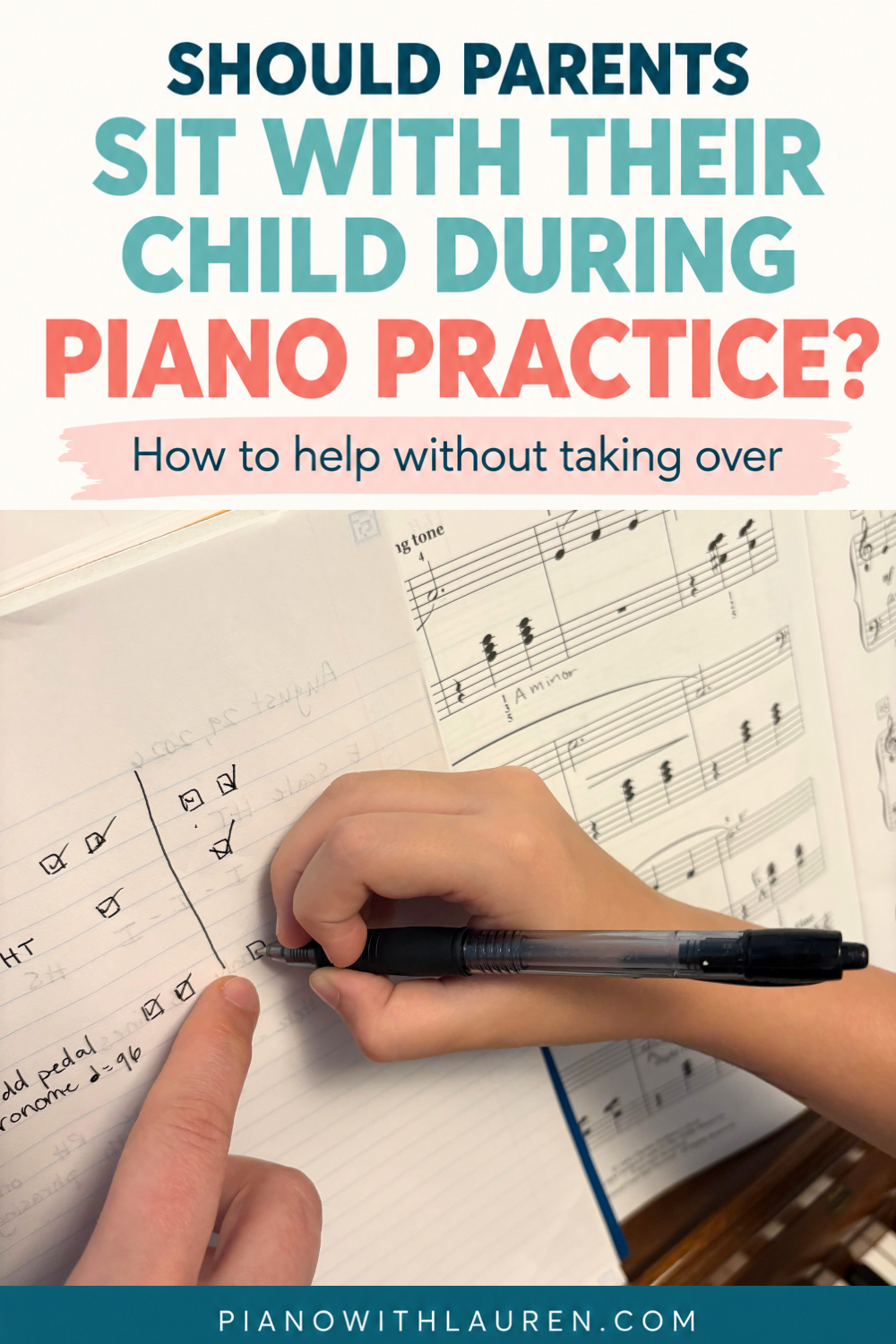
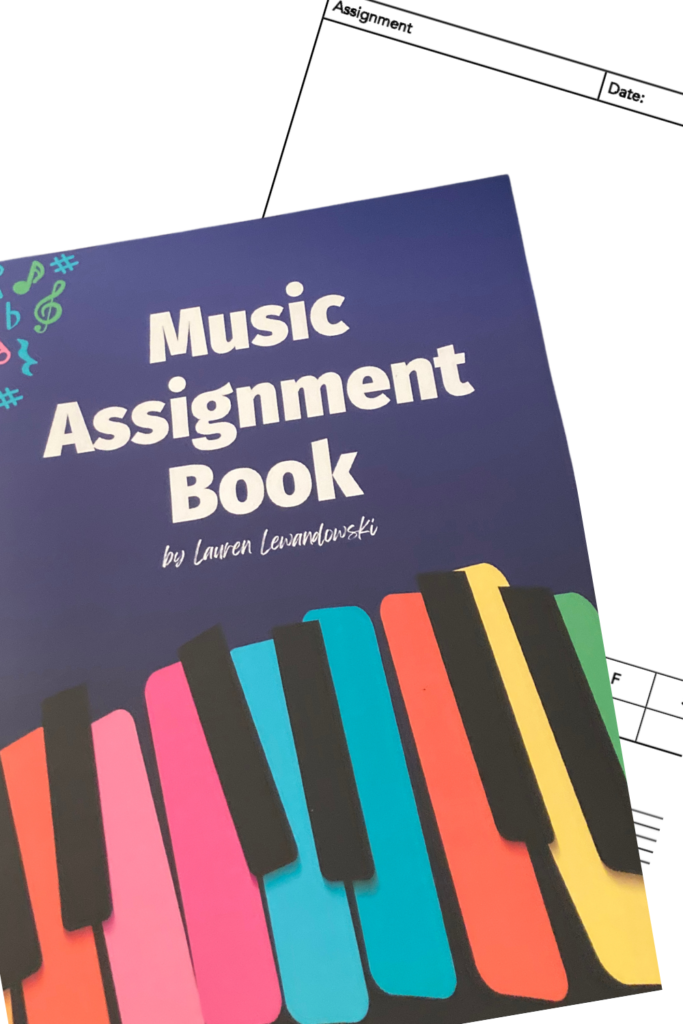
A written assignment can make this much easier. If the teacher has listed specific pieces, page numbers, or practice goals, your child has something concrete to follow throughout the week.
If you use an assignment notebook or practice book, keep it at the piano with a pencil so it becomes part of the practice routine. Page markers can also be helpful for marking the pages students should practice.
Let Your Child Do as Much as They Can Independently
It’s easy for a parent to become the manager of the entire practice session.
“Play your scale first.”
“Now do this piece.”
“Don’t forget that measure.”
“Your teacher said to do that three times.”
Sometimes that help is necessary. But as your child becomes more comfortable, try handing some of those decisions back to them.
Instead of telling them what comes next, ask:
“What’s next on your assignment?”
Instead of reminding them how many times to repeat a section, ask:
“What did your teacher write?”
Even something as simple as letting your child check off completed practice tasks can give them more ownership.
The long-term goal isn’t just to raise a child who practices when reminded. It’s to help them become a musician who knows how to practice independently.
Should Parents Correct Wrong Notes?
This is where I encourage parents to be careful.
If you play piano yourself, it can be very tempting to correct every wrong note, rhythm, fingering, or articulation you hear.
But home practice doesn’t need to become another piano lesson.
Constant correction can make a child feel like someone is evaluating every note they play. It can also create frustration between parents and children.
If you notice an obvious problem, you can point your child back toward what the teacher asked:
“Can you check what your teacher wrote about that section?”
Or:
“I think that’s one of the measures you were supposed to work on slowly.”
Then let your child try to solve the problem.
If you’re not sure what’s correct, it’s perfectly fine to leave it for the teacher.
What If You Don’t Play Piano?
You can still be extremely helpful.
You don’t need to know whether your child played an F-sharp instead of an F-natural to help them develop good practice habits.
You can help your child:
- remember when it’s time to practice
- find the assignment
- work through a checklist
- repeat a difficult section
- notice whether they’re rushing
- celebrate improvement
- write down a question to ask the teacher
Your role is primarily to support the practice habit, not to provide musical instruction.
Give Your Child a Comfortable Practice Setup
Sometimes children have trouble focusing at the piano because the setup itself isn’t working well.
A young child whose feet are dangling from the bench may feel less stable and comfortable than a child whose feet are supported.
If your child can’t reach the floor, a simple adjustable piano footstool can give their feet somewhere to rest.
You can also keep a few basic practice supplies within reach—a pencil, page markers, assignment notebook, and metronome if your child’s teacher uses one.
The easier it is for your child to sit down and begin, the less a parent has to manage.
When Should Parents Start Stepping Back?
There’s no specific age when a child should suddenly practice completely independently.
Instead, watch what your child can handle.
If you’re currently sitting beside your child for the entire practice session, you might start by helping them read the assignment and then moving away while they complete the first task.
Eventually, you might only need to ask:
“Did you check your piano assignment today?”
Some children become independent quickly. Others need more support for longer.
What matters is that you’re gradually transferring responsibility rather than doing everything for them indefinitely.
What If My Child Wants Me to Sit With Them?
If your child enjoys having you nearby, you don’t necessarily need to stop just for the sake of independence.
Your presence can be encouraging, particularly for a young beginner.
The important question is whether your presence is supporting their independence or replacing it.
If your child plays while you listen but still knows what to practice, solves problems, and follows the assignment independently, sitting nearby isn’t a problem.
If they stop after every measure and ask, “Was that right?”, it may be time to step back a little.
You want your child to develop confidence in their own ears, decisions, and ability to work through a problem.
Parents Can Support Piano Practice Without Taking It Over
For many young beginners, having a parent involved in piano practice is helpful.
But involvement doesn’t have to mean sitting on the bench, correcting every note, or managing every minute.
Start with the support your child needs now. Help them understand the assignment, establish a regular routine, and learn what productive practice looks like.
Then, little by little, give some of that responsibility back.
Eventually, the goal is for your child to sit down at the piano and know:
what to practice, how to get started, and what to do when something is difficult.
That’s a much more valuable skill than simply learning to practice when a parent is sitting beside them.
More Help With Piano Practice
Building good practice habits takes time. These articles can help you create a routine that works for your child and gradually encourage more independent practice.
- Piano Practice for Kids: A Guide for Parents and Teachers
- How to Create a Piano Practice Routine That Works
- How to Get Your Child to Practice Without a Battle
- How Often and How Long Should Kids Practice Piano?
- Should Parents Sit With Their Child During Piano Practice?
- How Parents Can Help With Piano Practice—Even If They Don’t Play Piano
Ready to Put It All Together?
Most of my blog posts explore one teaching topic at a time. If you’re looking for a complete first-year teaching roadmap, my course, Beyond the Lesson Book, shows how these concepts fit together across an entire year of beginner piano lessons.
🎹 Explore Beyond the Lesson Book

Lauren teaches piano to students of all ages. She enjoys creating resources for her students and teachers. She is the author of Ready for Theory®. For personalized help, check out the consultations page for teachers.