This post may contain affiliate links. As a Sheet Music Plus and Amazon Associate, I earn from qualifying purchases. That means I make a small commission (at no additional cost to you) if you purchase something from an affiliate link.
Piano method books are an important part of teaching beginning students. They introduce musical concepts in a logical sequence, provide appropriate repertoire, and give teachers a framework for moving students forward.
But even the best method book can’t cover everything a student needs to learn.
Over the years, I’ve found that some of the most valuable moments in piano lessons happen outside the method book. Whether we’re working on a technique exercise, exploring a new musical concept, or playing a rhythm game, these activities help students develop skills that support their progress at the piano.
The challenge for teachers is knowing what to include beyond the lesson book without overwhelming students or spending hours preparing additional materials.
Here are some of the areas I consider when planning a well-rounded piano lesson.
1. Technique and Keyboard Skills
Technique is one of the first areas I like to develop beyond the method book.
While most beginner methods introduce basic hand positions and technical concepts, students often benefit from additional exercises that reinforce coordination, finger independence, and comfortable movement at the keyboard.
For young beginners, this might involve simple keyboard activities that encourage relaxed movement and good hand position. As students progress, I introduce more structured technical work, including five-finger patterns, scales, chords, and eventually arpeggios.
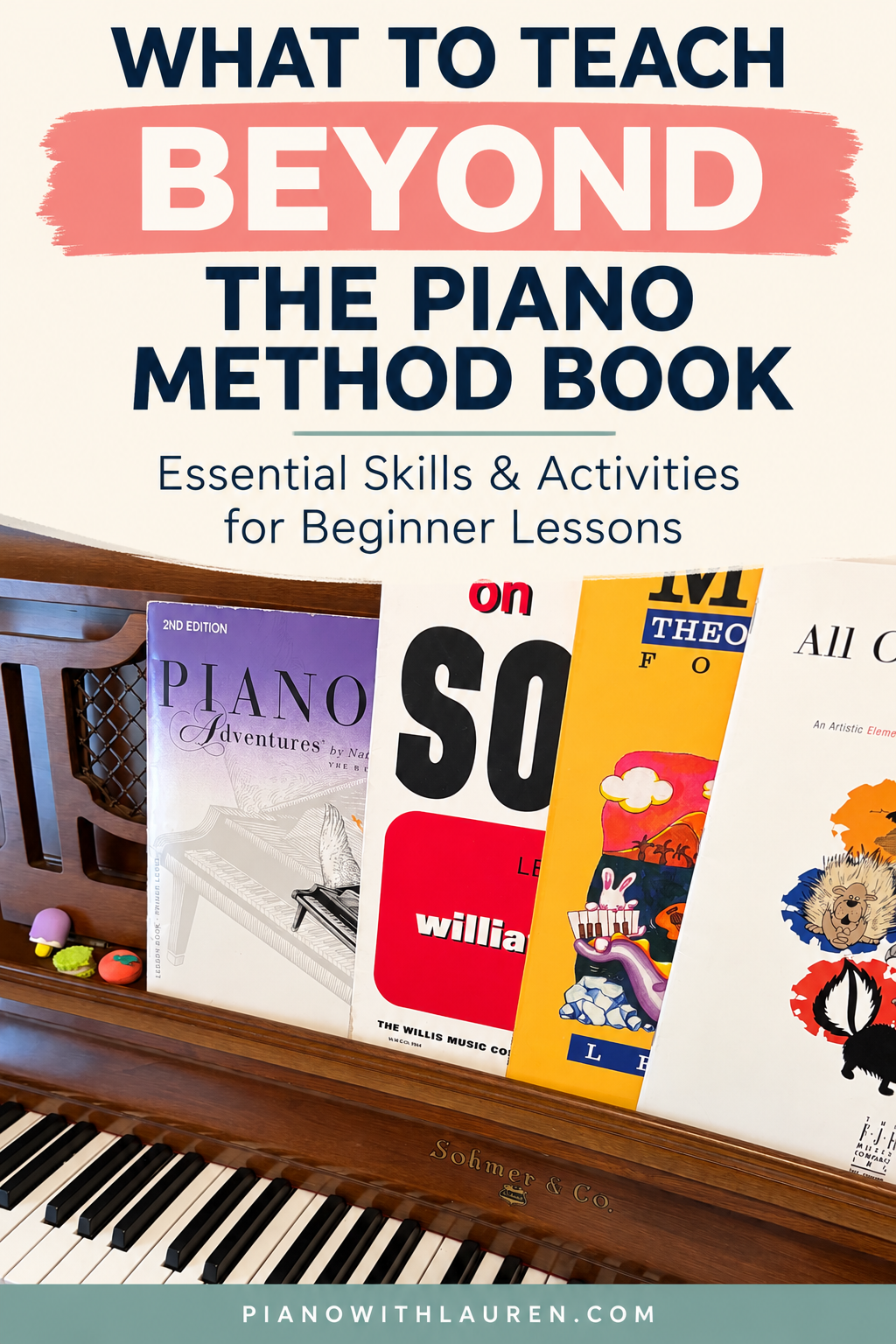
Some students also benefit from a supplemental technique book, such as A Dozen a Day by Edna Mae Burnam or Technique & Artistry from Faber Piano Adventures.
I generally like to begin lessons with a short technique exercise. It helps students settle into the lesson and gives us an opportunity to work on technical skills before moving into repertoire.
2. Supplemental Repertoire
One of my favorite ways to expand piano lessons is through supplemental repertoire.
Method books provide a carefully sequenced introduction to reading and playing music, but students benefit from applying those skills to a wider variety of pieces.
Supplemental music might include seasonal selections, familiar melodies, teacher-student duets, or pieces that introduce a different musical style.
I also like to plan supplemental repertoire around events throughout the year. Recitals, holidays, and other performance opportunities give students something special to work toward.
Choosing music outside the method book doesn’t mean constantly introducing more difficult pieces. Sometimes a relatively easy selection is exactly what a student needs to build confidence, improve reading fluency, or enjoy playing something familiar.
The important thing is choosing music that supports the student’s development while keeping lessons interesting.
To learn more about supplemental repertoire, check out: Best Piano Books for Ages 6-8
3. Music Theory Activities
Most piano method books introduce theory concepts alongside repertoire. However, students often need additional opportunities to practice and apply what they’ve learned.
For example, a student might understand an interval when it’s introduced in a lesson book but still have difficulty recognizing it in unfamiliar music. This is where supplemental theory activities can be especially helpful.
I like to use a combination of written exercises, keyboard activities, and games to reinforce important concepts. Depending on the student’s age and level, we might work on note reading, intervals, rhythm, musical terms, or basic chord patterns.
These activities don’t need to take a large portion of the lesson. Sometimes a few minutes of focused review is enough to strengthen a concept before moving on. I also find that hands-on activities are particularly useful for younger students who benefit from a change of pace during their lessons.
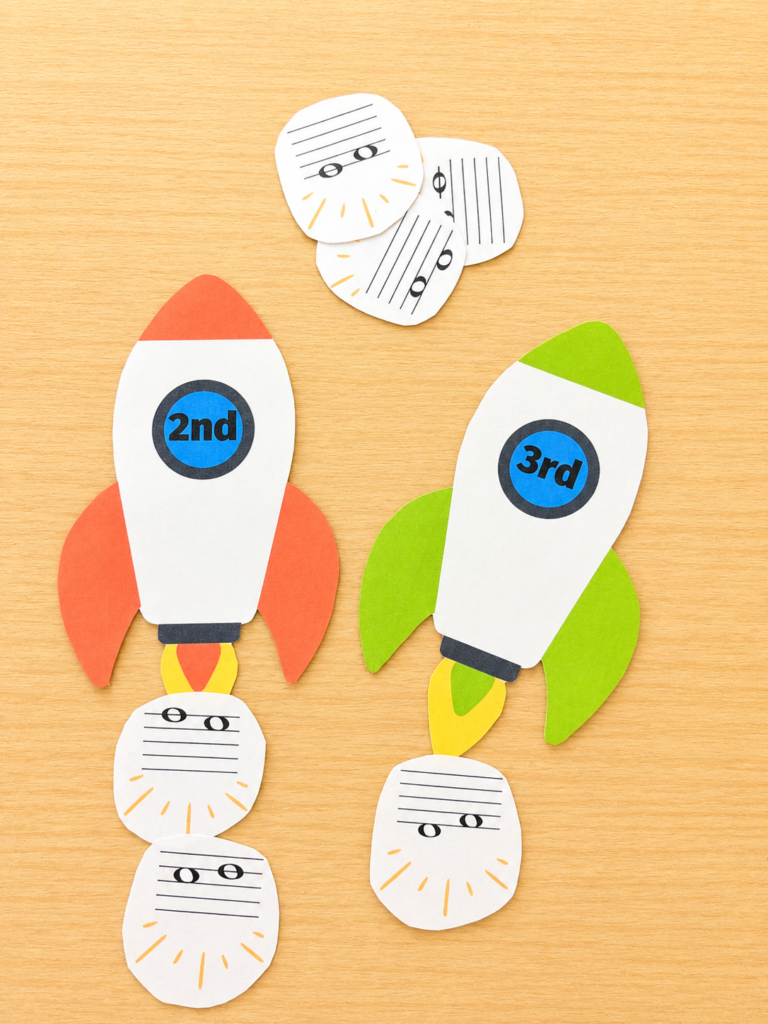
4. Rhythm and Ear Training
Rhythm and listening skills are essential parts of learning music, but they don’t always receive enough attention when lessons revolve entirely around assigned pieces.
I like to incorporate short rhythm activities throughout the year. Clapping, tapping, counting, and reading rhythm patterns away from the piano can help students develop a stronger sense of pulse and rhythmic accuracy.
Ear training can be approached in much the same way. Young students might identify high and low sounds, echo a short melody, or listen for changes in dynamics. More experienced beginners can work on recognizing melodic patterns and intervals.
These activities are easy to incorporate into regular lessons, and many can be adapted for students at different levels.
5. Creativity and Musical Exploration
Another area worth including beyond the method book is creativity. Beginning students don’t need an extensive knowledge of music theory to start exploring sounds and creating their own musical ideas.
Simple improvisation activities can encourage students to experiment with the keyboard, listen carefully, and become more comfortable making musical decisions.
For example, a student might create a short melody using a limited group of notes or experiment with different dynamics and articulations. These experiences can help students understand that music is something they can create, not just something they reproduce from a printed page.
Creativity doesn’t have to become a major part of every lesson. Even occasional opportunities for musical exploration can be valuable.
6. Performance and Musicianship Skills
Learning a piece isn’t quite the same as preparing it for performance.
Students also need to develop skills such as maintaining a steady tempo, playing with musical expression, recovering from mistakes, and performing confidently from beginning to end. I like to introduce these ideas early rather than waiting until students are preparing for their first recital.
Teacher-student duets can also be a wonderful way to develop musicianship. They encourage students to listen, maintain a steady beat, and experience playing as part of an ensemble.
As students become more experienced, these skills become increasingly important.
How Do You Fit Everything Into a Piano Lesson?
Looking at all these areas, it’s easy to wonder how you’re supposed to fit everything into a 30-minute lesson.
The answer is that you don’t need to cover every skill during every lesson.
Some lessons may include a rhythm activity, while others focus on technique or supplemental repertoire. A student struggling with note reading may need extra reinforcement in that area, while another student might be ready for more challenging technical work.
I also like to remember that one activity can reinforce several skills at once. A supplemental piece might provide opportunities to work on rhythm, reading, technique, and musical expression.
The goal isn’t to fill every available minute with additional activities. It’s to make thoughtful decisions about what each student needs.
If you’re looking for ideas on organizing these different elements, you might also enjoy my article on How to Structure a 30-Minute Piano Lesson.
Creating a Complete First-Year Teaching Plan
Knowing that students need more than a method book is one thing. Deciding what to introduce, when to introduce it, and how to reinforce those skills throughout the year is another.
This is something I spent a great deal of time thinking about while developing my course, Beyond the Lesson Book: A Complete First-Year Piano Teaching Plan.
I created the course for teachers who want a more complete approach to teaching first-year piano students without having to develop an entire curriculum on their own.
Rather than simply providing a collection of activities, the course helps teachers understand how different areas of musical development fit together during a student’s first year.
It includes a structured teaching plan, practical resources, and sample lesson plans to help teachers bring everything into their own studios.
If you’ve ever wondered whether you’re covering everything your beginning students need, this course was designed with that question in mind.
⭐️ Explore Beyond the Lesson Book: A Complete First-Year Piano Teaching Plan
Teaching Beyond the Method Book
Method books are valuable teaching tools, but they’re only one part of a student’s musical education.
By incorporating technique, supplemental repertoire, theory, rhythm, ear training, creativity, and performance skills, we can help students develop a broader understanding of music.
You don’t need to introduce everything at once or completely redesign your lessons. Start by considering which areas need additional attention and look for simple ways to incorporate them into your existing teaching routine.
Over time, these experiences help students become more confident, capable, and well-rounded musicians.
Ready to Put It All Together?
Most of my blog posts explore one teaching topic at a time. If you’re looking for a complete first-year teaching roadmap, my course, Beyond the Lesson Book, shows how these concepts fit together across an entire year of beginner piano lessons.
🎹 Explore Beyond the Lesson Book

Lauren teaches piano to students of all ages. She enjoys creating resources for her students and teachers. She is the author of Ready for Theory®. For personalized help, check out the consultations page for teachers.