This post may contain affiliate links. As a Sheet Music Plus and Amazon Associate, I earn from qualifying purchases. That means I make a small commission (at no additional cost to you) if you purchase something from an affiliate link.
Choosing piano books for a beginner can be overwhelming. There are so many method books, theory books, and supplemental materials available that it can be difficult to know what you actually need.
For beginner piano students ages 6–8, I like to use a combination of resources rather than relying on one book for everything. A lesson book provides the foundation, while rote pieces, theory activities, and supplemental solos give students additional ways to develop their skills.
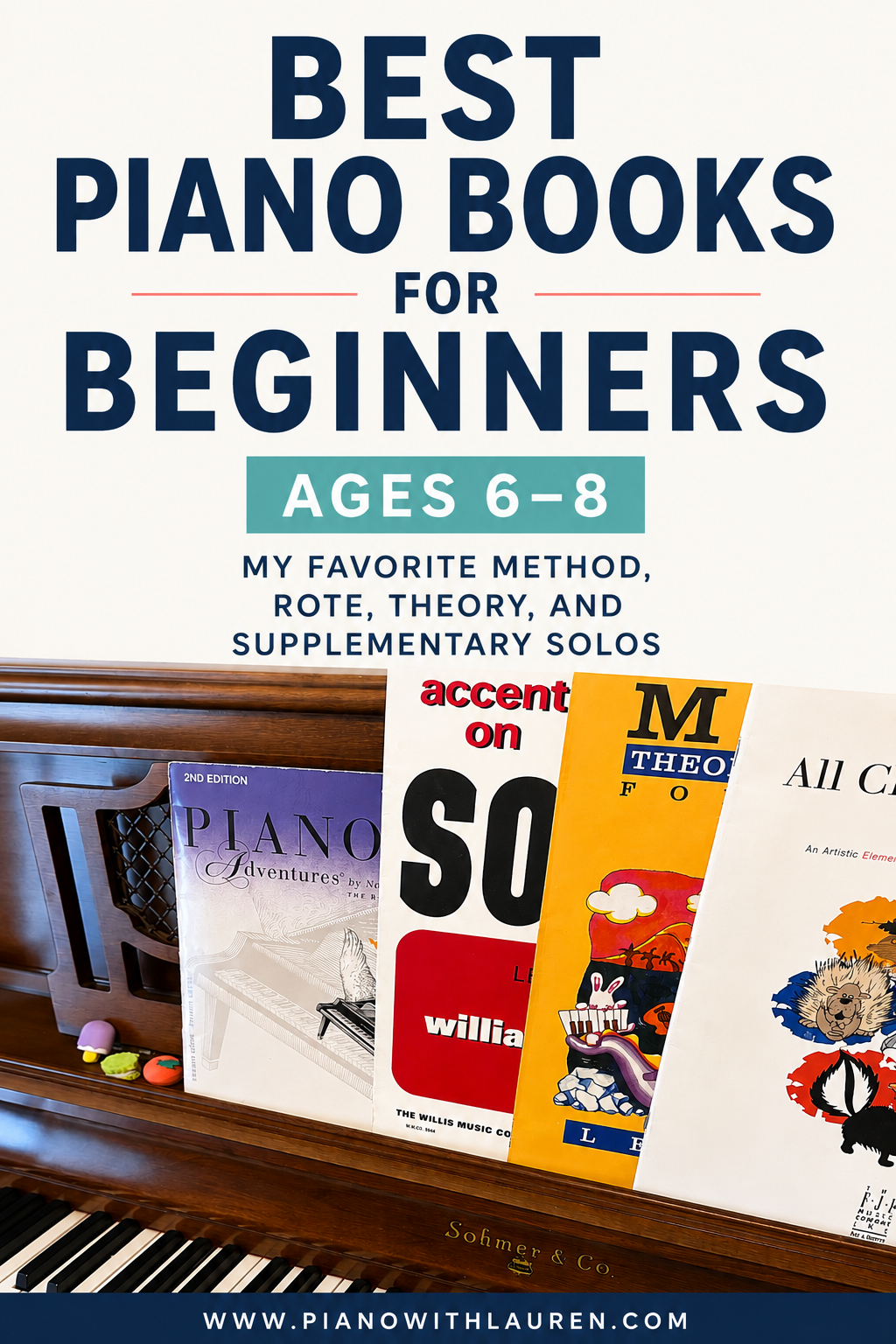
Below are some of my favorite piano books for beginners ages 6–8 and how I use each type of book in lessons.
⭐️ Best Piano Method Books for Beginners
A method book usually provides the structure for a beginner’s first year of piano lessons. It introduces new concepts gradually and gives students music to practice between lessons.
There are many good piano methods available, but these are two that I return to most often with students in this age group.
Faber Piano Adventures
Piano Adventures is one of my favorite choices for beginner piano students because it provides a clear progression through the fundamental concepts students need during their first year.
Faber offers several different series, including books for younger beginners and accelerated students. For students ages 6–8, I generally find that the core Piano Adventures series is the best fit.
I also like that there are plenty of supplemental books available within the series, which makes it easy to add additional repertoire when a student needs it.
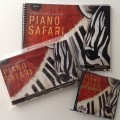
Piano Safari
Piano Safari takes a somewhat different approach to beginning piano and incorporates rote learning alongside reading.
I especially like having this method as an option because not every student learns in exactly the same way. The combination of reading, technique, and rote pieces gives students opportunities to develop several different musical skills from the beginning.
⭐️ Best Rote Piano Books for Beginners
Rote pieces are one of my favorite additions to beginner piano lessons.
Because students learn these pieces through demonstration, patterns, and imitation rather than relying entirely on note reading, they can often play music that sounds more sophisticated than the pieces they are currently able to read independently.
This makes rote repertoire a great complement to a traditional lesson book.
Piano Safari Pattern Pieces, Book 1
Piano Safari Pattern Pieces is one of my go-to resources for rote repertoire.
The pieces use patterns that students can recognize and remember, allowing beginners to explore more of the keyboard and create a bigger sound without being limited by their current reading level.
Elvina Pearce – Solo Flight: For Time to Begin, Part 1
Solo Flight: For Time to Begin is a wonderful collection for giving beginning students music that sounds more sophisticated than their current reading level might allow. I like using these pieces to help students explore patterns across the keyboard and focus on musical expression without being limited by note reading.
The pieces give beginners an opportunity to create a fuller, more mature sound at the piano early in their lessons, making this a great supplement to a traditional method book.
⭐️ Best Piano Theory Books for Beginners
Theory books can reinforce concepts away from the piano and give students additional practice with skills such as note naming, rhythm, intervals, and musical symbols.
I don’t necessarily expect a theory workbook to do all of the teaching. Instead, I use written theory as one part of a larger approach that also includes games, activities, and work at the piano.
Ready for Theory Prep A
Ready for Theory Prep A is a workbook I created for beginning piano students. I designed it to give students straightforward written practice with the theory concepts we’re already working on during lessons.
I like being able to assign a short activity that reinforces a concept without making written theory take up a large portion of the lesson.
Ng – Music Theory Made Easy for Kids, Level 1
Music Theory Made Easy for Kids is another theory resource I like for young beginners.
Its kid-friendly presentation makes it approachable for this age group, and it can be used alongside a student’s regular lesson materials for additional theory practice.
⭐️ Best Supplementary Piano Solos for Beginners
Supplementary solos are another one of my favorite resources to add to a student’s regular lesson book.
A method book has an important job to do: introduce concepts in a logical sequence. But that means the pieces are often written primarily to reinforce whatever concept is being taught on that page.
Supplementary repertoire gives me more freedom to choose music simply because I think a student will enjoy it or because it develops a particular musical skill.
Here are several collections I frequently use with beginner students.
Bober – All Creatures Great But Small
All Creatures Great But Small is a fun collection to use with young students, particularly those who enjoy pieces with imaginative titles and character. The teacher duets in this book really bring the solos to life.
Gillock – Accent on Solos, Book 1
Accent on Solos is one of my favorite collections for introducing beginners to expressive solo repertoire.
Gillock’s music gives students opportunities to think beyond simply playing the correct notes and rhythms and begin working on musical details such as phrasing, dynamics, and character.
Goldston – Fantastic Fingers, Book 1
Fantastic Fingers is another collection I like to keep available for beginning students.
It provides additional repertoire outside of the student’s method book and gives me another source to pull from when I’m looking for a piece that suits a particular student.
Snell – Essential Piano Repertoire, Preparatory Level
Essential Piano Repertoire is a great way to begin introducing students to traditional piano literature.
I like including this type of repertoire alongside contemporary educational pieces so that students encounter a variety of musical styles during their first years of lessons.
👉 How I Choose Books for Each Beginner
I don’t use every book on this list with every student.
Instead, I usually start with a primary lesson book and then add resources based on what that particular student needs. One student might benefit from more rote pieces, while another may be ready for additional solos or need extra reinforcement with note reading.
That’s also why I don’t think there’s one “perfect” piano method book.
The lesson book provides a framework, but the teacher can fill in the gaps with repertoire, theory, ear training, technique, and activities. Over time, those different pieces work together to create a much more complete first-year piano experience.
Ready to Put It All Together?
Most of my blog posts explore one teaching topic at a time. If you’re looking for a complete first-year teaching roadmap, my course, Beyond the Lesson Book, shows how these concepts fit together across an entire year of beginner piano lessons.
🎹 Explore Beyond the Lesson Book
Continue Building Music Theory Skills
If you’re teaching beginner piano students ages 6–8, these guides cover the essential music theory concepts every student should learn.
- Piano Theory for Beginners: What Students Ages 6–8 Need to Learn
- Music Note Naming for Beginner Piano Students
- How to Teach Steps, Skips, and Intervals to Beginner Piano Students (Ages 6–8)
- Teaching Rhythm to Beginner Piano Students
- Major Five-Finger Scales & Chords for Beginner Piano Students
- Musical Terms & Symbols for Beginner Piano Students
- Ear Training for Beginner Piano Students

Lauren teaches piano to students of all ages. She enjoys creating resources for her students and teachers. She is the author of Ready for Theory®. For personalized help, check out the consultations page for teachers.