Teaching the musical alphabet is one of the first steps in early piano lessons—but it doesn’t have to feel repetitive or boring. For young beginners, especially ages 4–5, the best way to learn is through movement, play, and hands-on activities.
These musical alphabet games for piano students help children learn A–G in a fun, engaging way while building a strong foundation in early music theory for kids.
🎵 What Is the Musical Alphabet?
The musical alphabet uses only seven letters:
A – B – C – D – E – F – G
After G, the pattern repeats back to A. This looping pattern helps piano students understand how notes move across the keyboard.
Learning the musical alphabet is an essential part of early piano lessons for 4–6 year olds, because it prepares students for reading music and finding notes quickly.
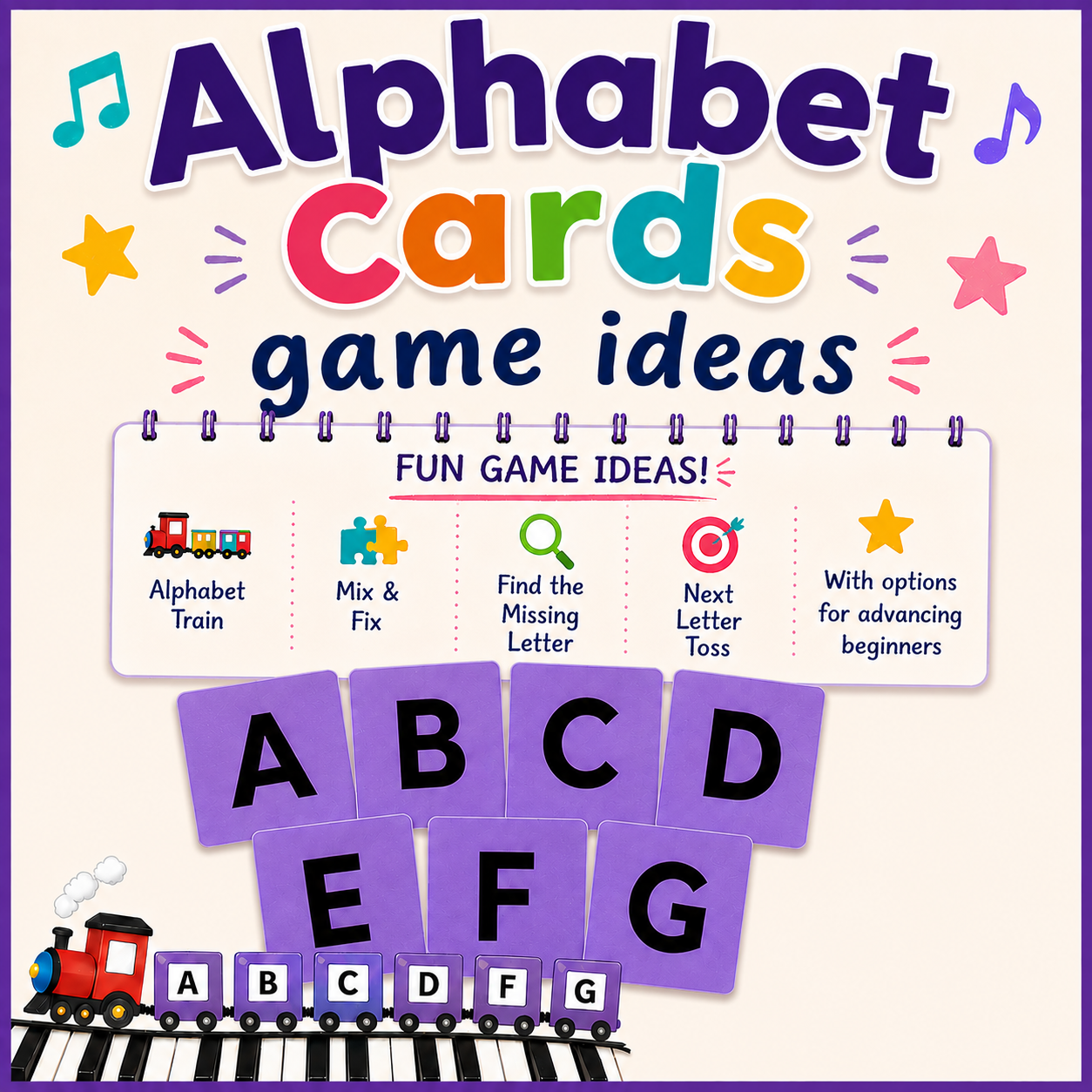
🚂 Alphabet Train
Lay out your alphabet cards in order from A to G.
Have the student:
- Use their finger, a small toy, or even a pretend “train”
- Move along the cards while saying each letter out loud
Once they reach G, add another A to show how the pattern repeats. You can add a tag in your teaching, so young students always remember. Something like “After G, comes A” can be helpful to these young beginners.
Why it works:
This helps students understand that the musical alphabet loops, which is a key concept for piano.
🧩 Mix & Fix
Shuffle your alphabet cards and spread them out.
Ask the student to:
- Put the cards back in order from A to G
- Say the letters as they organize them
For younger students, start with just 3–4 letters and build up.
Why it works:
This builds recognition and sequencing skills without overwhelming them.
🔎 Find the Missing Letter
Place the cards in order, then secretly remove one. Ask the student to turn around or close your eyes while you play the game. (Kids love this!)
Ask:
- “Which letter is missing?”
Let the student figure it out and replace it.
Why it works:
This encourages students to think ahead and strengthens memory.
🎯 Next Letter Toss
This game does not use the alphabet cards. Simple use a beanbag or small soft object.
- Say a letter (for example, C)
- Toss the beanbag to the student
- The student says the next letter (D)
Why it works:
This builds quick recall and keeps energy levels high.
🐍 Build-a-Snake
Have the student lay out cards like a long “snake”:
A–B–C–D–E–F–G–A–B–C…
Encourage them to:
- Keep the pattern going
- Say each letter as they build
Why it works:
Repetition through play helps students internalize the pattern without memorization drills.
🎹 Take It to the Piano
Once students are comfortable with the cards, connect the game to the keyboard:
- Turn the cards over and let the student draw one card.
- The student then finds that letter on the piano
- For an added challenge, ask the student to find more of that same letter.
Students can see how the alphabet corresponds to the piano keys.
🏆 Tips for Success
- Keep each game short (1–2 minutes)
- Rotate activities to maintain attention
- Celebrate effort, not perfection
- Print the alphabet cards on bright, colorful cards for engagement. You can make sets in different colors.
Helpful Resources for Teaching the Musical Alphabet
If you’re looking to make these musical alphabet games even easier to use in your lessons, here are a few helpful resources to get you started.
Printable Musical Alphabet Cards
Using colorful alphabet cards makes these games more engaging and hands-on for young learners. You can print multiple sets to use for activities like Alphabet Train, Mix & Fix, and Build-a-Snake.
👉 Grab your printable alphabet cards here.
Beginner Piano Workbook for Kids
If your students enjoy these games, they’ll love having activities they can take home. A beginner-friendly workbook filled with coloring, tracing, and simple music activities helps reinforce concepts like the musical alphabet, finger numbers, and early rhythm skills.
👉 Check out the beginner piano workbook
Rhythm Instruments for Kids
Simple rhythm instruments like rhythm sticks or small drums can add movement and excitement to your lessons. They’re perfect for pairing with musical alphabet games and building early rhythm skills.
Make Learning Stick
The more interactive and fun your lessons are, the more your students will remember. With the right tools and activities, learning the musical alphabet becomes something students look forward to every lesson.
👉 Looking for a full roadmap of what to teach beginners?
Check out: Piano Lessons for 4–5 Year Olds: What Beginners Should Learn First
Related Young Beginner Piano Topics
- Teaching Hands and Finger Numbers in Piano Lessons
- How to Teach Piano Black Keys and White Keys
- Decorate the Piano: A Fun Piano Key Activity
- Teaching Rhythm to Preschool Piano Students
Beginning Piano Sounds Every 4-5 Year Old Should Learn to Recognize

Lauren teaches piano to students of all ages. She enjoys creating resources for her students and teachers. She is the author of Ready for Theory®. For personalized help, check out the consultations page for teachers.